Choosing the right grinder can transform your brewing experience. Each type has its strengths and weaknesses. How to choose between manual and electric grinders is a common question among coffee enthusiasts.
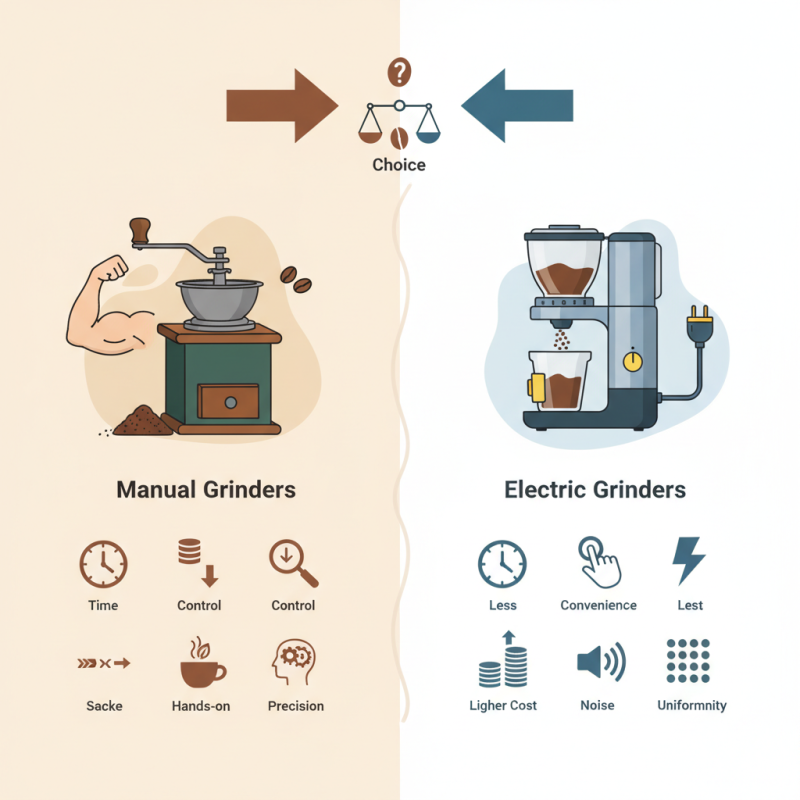
Manual grinders offer a hands-on approach. They provide control over grind size and consistency. However, they require more effort and time. Electric grinders, on the other hand, are fast and convenient. They can produce a consistent grind with just the push of a button. Yet, not all electric grinders are created equal, and they can be noisier.
Evaluating factors like cost, convenience, and desired grind quality is essential. Remember, the best choice depends on your unique preferences. Both types have their dedicated followers. Reflecting on your priorities will guide your decision. The right grinder can elevate your coffee ritual significantly.
Understanding the Differences Between Manual and Electric Grinders
When choosing between manual and electric grinders, it's crucial to understand their differences. Manual grinders require physical effort but offer more control over grind size. This can be more satisfying for some users. In contrast, electric grinders provide convenience and speed, making them ideal for those who value efficiency in their coffee routine.
The grind consistency varies between the two types. Manual grinders often produce a more uniform grind, as you can adjust your technique with practice. Electric grinders may struggle with this, especially at lower price points. Noise levels are another factor. Manual grinders operate quietly, allowing for leisurely mornings. However, electric versions can be noisy, which might disturb others in your household.
Consider the maintenance required for each option. Manual grinders typically need less cleaning due to fewer moving parts. Electric grinders, on the other hand, may require more frequent upkeep to ensure longevity. It's essential to reflect on your habits and preferences. Do you enjoy the ritual of grinding? Or do you prefer the speed offered by electric models? This can greatly influence your experience.
Evaluating Your Grinding Needs: Capacity and Frequency of Use
When choosing between manual and electric grinders, evaluating your grinding needs is crucial. Consider how often you plan to use the grinder. If you drink coffee daily, an electric grinder might save you time. On the other hand, if you enjoy a leisurely pace, a manual grinder can be more enjoyable.
Capacity is another essential factor. How much coffee do you typically brew at once? If you often entertain guests, a larger capacity grinder is necessary. However, smaller grinders are sufficient for personal use. Remember, larger models may take up more counter space, which is a consideration for many.
When selecting a grinder, keep an eye out for consistency in grind size. A grinder that produces uniform grounds significantly impacts extraction. Test both types and see which suits your routine better. Sometimes, switching methods can enhance the overall experience. Don't overlook your preferences. The tactile feedback of a manual grinder offers a unique connection to the brewing process that some find rewarding.
Top 10 Tips for Choosing Manual vs Electric Grinders
| Feature |
Manual Grinders |
Electric Grinders |
| Grinding Capacity |
Low to Moderate |
High |
| Frequency of Use |
Occasional |
Daily |
| Portability |
Very Portable |
Less Portable |
| Grinding Consistency |
Variable |
Highly Consistent |
| Noise Level |
Quiet |
Noisy |
| Price Range |
$20 - $50 |
$50 - $300 |
| Ease of Use |
Requires Manual Effort |
One-Touch Operation |
| Maintenance |
Simple |
More Complex |
| Type of Grind |
Coarse to Fine |
Consistent Grain Size |
| User Experience |
Hands-On |
User-Friendly |
Assessing Grind Consistency: Key Factors to Consider
Choosing between manual and electric grinders can significantly impact your coffee experience. When it comes to grind consistency, various factors come into play. The grind size is crucial. A uniform grind allows for optimal extraction, enhancing flavors. Manual grinders provide control over this aspect. You can feel the texture and adjust based on your preferences. But, they can be labor-intensive.
Electric grinders can deliver consistent grinds quickly. However, they may generate heat and reduce flavor quality. It’s essential to check specifications for even distribution. Burr grinders are often recommended for their precision. Still, even high-quality machines have limits in grind size. Regular maintenance is necessary to avoid inconsistencies over time.
Consider your brewing method as well. Different methods require different grind sizes. A French press, for instance, demands coarser grinds, while espresso needs finer ones. Experiment with various settings to find what suits you best. Trying both types might lead to new insights. Adopting a reflective approach can sharpen your coffee-making skills. Your choice should align with your taste preferences and brewing habits.
Price Range Comparison: Manual vs Electric Grinders
When considering the price range of manual versus electric grinders, it's essential to understand the differences. Manual grinders typically start around $20 and can go up to $100 for high-end models. They are often praised for their simplicity. The precision offered by manual grinding can enhance the flavor of coffee, making some enthusiasts prefer this method.
In contrast, electric grinders generally range from $50 to over $500. Industry reports indicate that electric grinders provide convenience and speed. For those who grind frequently, this efficiency can justify the higher price. However, cheaper models may sacrifice consistency in grind size. This aspect can affect the taste of your brew and is a point of concern for many coffee lovers.
Investing in a grinder is a balance of cost and quality. Some users find manual grinders more reliable, while others appreciate the speed of electric options. Reflect on your brewing habits and budget. Both options have their pros and cons, making it crucial to carefully assess your needs before making a decision.
Price Range Comparison: Manual vs Electric Grinders
Ease of Use and Maintenance: Which Grinder is More Convenient?
When considering grinders, ease of use and maintenance are crucial factors. Electric grinders are generally easier to operate. They offer speed and consistency. Many users appreciate the one-touch operation. According to a survey by the Specialty Coffee Association, 65% of coffee enthusiasts prefer electric grinders for everyday use due to their convenience.
Manual grinders, on the other hand, require more effort. They can be less convenient for those with busy lifestyles. However, they have their own benefits. They are often more portable and do not require electricity. For outdoor enthusiasts or travelers, a manual grinder can be an ideal choice. An industry report highlighted that manual grinders often produce a more uniform grind, an advantage for coffee purists.
Maintenance is another important factor. Electric grinders usually have more complex components. This means they can require more upkeep over time. Users should regularly clean the grinding chamber and blades. Neglecting this can impact performance. Manual grinders, while simpler, also need care. They should be emptied and cleaned after each use to avoid residue buildup. Ultimately, the decision often depends on lifestyle and preference. Each type has its own strengths and weaknesses that must be assessed.
Conclusion
Choosing between manual and electric grinders involves understanding their fundamental differences in functionality and user experience. Manual grinders are typically favored for their simplicity and control over the grinding process, but they may require more effort, especially with frequent use. On the other hand, electric grinders offer convenience and consistency in grind size, making them suitable for those who prioritize ease of use and efficiency.
When considering how to choose between manual and electric grinders, it's essential to evaluate your grinding needs in terms of capacity and frequency of use, as well as the consistency of grind you require. Price is also a crucial factor; manual grinders are often more affordable, while electric grinders can vary significantly in cost. Finally, ease of use and maintenance should be examined, as these aspects greatly influence overall satisfaction with your grinding experience.

 Sophia Electric Appliance